
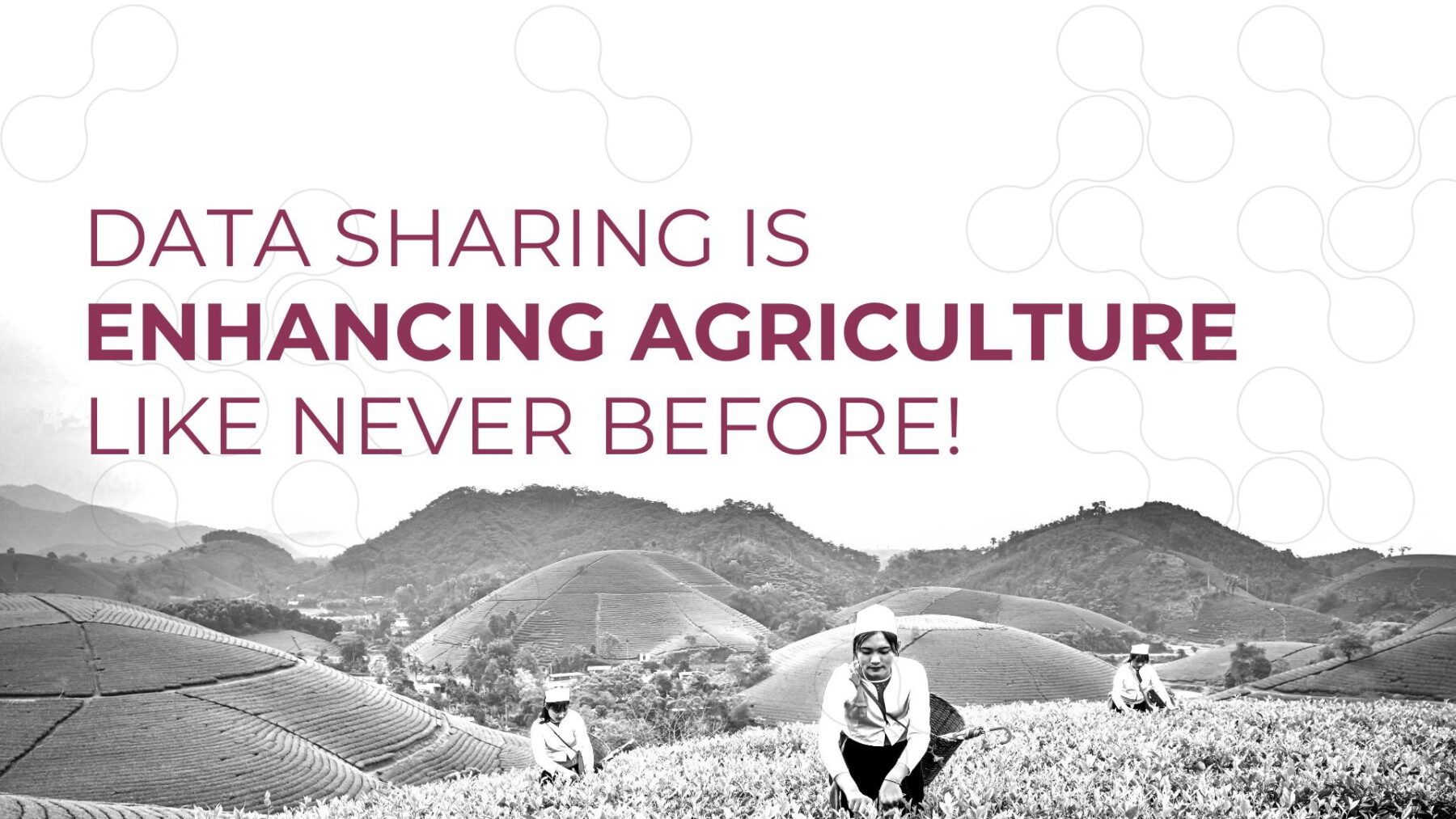
In today’s digital era, data has become as vital as water and soil in agriculture. From farmers and agronomists to researchers, and policymakers, the agricultural sector is increasingly relying on shared data to enhance productivity, sustainability, and innovation. However, challenges such as data fragmentation, security concerns, and interoperability issues often limit its potential. Trusted frameworks like the iSHARE Framework for Data Rights help overcome these barriers ensuring privacy, control, and transparency in data exchange.
In a field where timely decisions can make or break a harvest, data sharing is not just an advantage-it’s a necessity. By enabling exchange of data, the agricultural industry can improve efficiency, reduce waste, and drive innovation. Below are six key benefits of data sharing in agriculture, backed by real-world insights.
1. Optimising Farming Practices
Access to real-time data allows farmers to make informed decisions on irrigation, fertilisation, and pest control. Precision agriculture technologies, which utilise data-driven insights, have demonstrated significant benefits. For example, farmers using such technologies have seen a 4% increase in crop production and a 7% improvement in fertiliser placement efficiency. These practices have also led to a 9% reduction in herbicide and pesticide usage1
2. Strengthening Sustainability and Climate Resilience
Data sharing plays a crucial role in reducing agriculture’s environmental footprint by enabling smarter resource management and climate-resilient practices. The European Environmental Agency (EEA) reported a 5% reduction in agricultural greenhouse gas emissions between 2005 and 20222, thanks to precision farming and data-driven decision-making. Additionally, an extra 2% reduction was projected between 2022 and 20232, illustrating how data sharing contributes to mitigating climate change and conserving natural resources.
3. Improving Supply Chain Efficiency
Blockchain technology is revolutionising agricultural supply chains by ensuring transparency and reducing post-harvest losses. The World Bank estimates that around 13% of global food production is lost between harvest and retail3, often due to inadequate infrastructure. By enabling real-time tracking, blockchain can enhance storage and transport conditions, helping to curb these losses. Furthermore, the global blockchain market in agriculture is projected to grow at a 36.2%4 compound annual growth rate (CAGR) from 2024 to 2032, reflecting its widespread adoption and potential.
4. Innovation and Research Advancements
Data sharing is a catalyst of innovation in agriculture, especially when paired with artificial intelligence (AI). The AI in the global agriculture market was valued at approximately USD 1.7 billion in 2023 and is projected to reach USD 4.7 billion by 20285, promoting the growth investment in AI-driven agritech solutions. Countries such as the UK, Germany and The Netherlands are increasing their investments in precision agriculture technologies to enhance productivity and meet rising food demands. In fact, the European Investment Bank (EIB) has committed €3 billion in financing for green, gender-inclusive, and youth-focused agriculture investments6.
5. Improved Risk Management
Early warning systems help farmers prepare for threats like pests, diseases, and extreme weather. With real-time data collection and alerts, farmers can take proactive measures to protect their crops, reducing losses and improving yields. The UN’s Food and Agriculture Organization (FAO) has helped over 95 countries strengthen these systems7. Microinsurance companies are also using satellite data and AI to provide affordable insurance, enabling smallholder farmers to recover from climate-related losses 8.
6. Market Access & Economic Growth
Data-sharing not only improves efficiency, but also drives farmers’ market access. Data-driven insights help farmers align production with market demand, reducing waste and improving profitability. Digital platforms for data sharing have boosted smallholder farmers, increasing their incomes by up to 25%8 by connecting them with buyers and financial services.
Data sharing is changing agriculture—from better farming practices and sustainability to stronger supply chains, new innovations, risk management, and market growth. Trusted ecosystems using the iSHARE Framework for Data Rights help the sector make the most of these benefits while keeping data secure, transparent, and in control. As digital collaboration grows, the future of agriculture looks smarter and more resilient.
Sources:
- 1 Association of Equipment and Manufacturers (AEM), “The Environmental Benefits Of Precision Agriculture Quatified”, AEM, 21 March, 2024, https://www.aem.org/news/the-environmental-benefits-of-precision-agriculture-quantified
- 2 European Environment Agency, “Greenhouse Gas Emissions From Agriculture In Europe”, 31 October, 2024, https://www.eea.europa.eu/en/analysis/indicators/
- 3 United Nations. Statistics Division, “Ensure sustainable consumption and production patterns”, UN, accessed on February 20, 2025. https://unstats.un.org/sdgs/report/2022/goal-12/
- 4 Global Market Insights (GMI), “Blockchain in Agriculture and Food Supply Chain Market”, GMI, June, 2024, https://www.gminsights.com/industry-analysis/blockchain-in-agriculture-and-food-supply-chain-market
- 5 MarketsandMarkets Research, “Artificial Intelligence in Agriculture Market Size, Share and Growth” MarketsandMarkets Research, 2 February, 2023, https://www.marketsandmarkets.com/Market-Reports/ai-in-agriculture-market-159957009.html
- 6 European Investment Bank (EIB), “€3 Billion Of EIB Group Financing Announced For Farmers And Bioeconomy”, EIB, 10 December, 2024, https://www.eib.org/en/press/all/2024-497-eur3-billion-of-eib-group-financing-announced-for-farmers-and-bioeconomy
- 7 United Nations. Office for Disaster Risk Reduction, “Toward Multi-Hazard Early Warning Systems For Agri-Food Systems: Challenges And Opportunities”, UN, 13 October, 2022, https://www.undrr.org/media/83785/8 Harry Booth, “Time100 Next2024. Advocacy. Thomas Njeru” Time Magazine. 2 October, 2024. https://time.com/7023557/thomas-njeru/
Discover how data spaces are shaping the future of farming and join the movement towards a more connected and efficient agricultural ecosystem. Join Us
