
Build trusted data ecosystems with iSHARE
From the energy grids that power our cities, the supply chains that stock our shelves, to the datasets that fuel AI factories: data is an essential resource for our societies.
Unlocking the full potential of data requires organisations to collaborate and exchange data – granting access to data directly from the source to others’ services and applications. Yet in order to build such data ecosystem, there is one non-negotiable: trust.
The iSHARE Foundation is a non-profit organisation that ensures this trust by standardising data rights. Building on existing open standards, the iSHARE Trust Framework aligns the functional, legal, operational and technical rules needed so that access granted by a data rights holder is recognised seamlessly across systems, sectors and borders.

Our Knowledge Corner
We provide the following tools to ensure seamless onboarding.
-

Developer Portal
Technical documentation, specifications, and integration guides to build with confidence.
-

Trust Framework
Defines stakeholders’ rights, duties, and operational, technical, legal specifications.
-

Trust Body of Knowledge
FAQs, tips, and practical walkthroughs for adopting the iSHARE Framework.
-

Data Space Template
DSSC-aligned building blocks and steps to help launch your own data space.
-

Change Management
Transparent process for proposing, reviewing, and implementing Framework improvements.
-

Cookbook for Data Spaces
Jargon-free guide to understanding and building data spaces confidently.
Our Impact in Action
Take a look at all ongoing projects and collaborations!
-

Datastelsel Verduurzaming Utiliteit (DVU)
The Data System for the Sustainability of the Utility Buildings helps owners and tenants of large buildings like offices and schools share energy use data. This allows better comparisons of real-world energy consumption (rather than outdated estimates) and supports the government in reaching its climate change goals, whilst aiding building owners to take control of their energy consumption.
-

Dutch Metropolitan Innovations (DMI)
Allows over 100 organisations to collaborate with environmental data sources on Dutch cities; optimising urban planning and mobility through data on traffic flows, heat maps, demographic information, etc. An online catalogue (PDX) allows organisations to offer and access data and services, helping organisations make better decisions related to urban environments.
-

Digitaal Stelsel Gebouwde Omgeving (DSGO)
Digital System for the Built Environment (DSGO) focuses on enhancing how data is shared across the construction industry. It brings together architects, builders, and housing organisations under agreed technical standards, helping them tackle shared challenges like housing shortages, climate resilience, and ageing infrastructure.
-

i4Trust
Combines open-source components and shared infrastructure to help businesses and innovation hubs build trustworthy architecture for exchanging data. This initiative makes it easier and cheaper for organisations across different industries to safely share, publish, and trade data with one another.
-

Basic Data Infrastructure (BDI)
Makes logistics and supply chains run more efficiently by removing common obstacles to sharing data by linking various logistics companies along six use-cases (Pharma Data Corridor, Verifiability in Agrifood Transparency, Digital Distribution Delivery Profile, Building Site Delivery Profile, The Secure Chain Container, Trusted Goods Delivery). This Data Space automates data exchanges on real-time alerts, supply chain linkages, and goods distribution.
-

Common European Agricultural Data Space (CEADS)
Aims to help farmers, food companies, researchers, and governments share agricultural data. It sets shared standards through a three-layer approach: a Collaboration Framework establishing governance and legal rules via a Rulebook and Code of Conduct, a Services layer delivering shared trust and interoperability services, and an Applications layer where participants build end-user tools like dashboards and farm management systems.
-

WEBUILD
A European project involving over 200 organisations to build digital identity systems for businesses and individuals. Through a European Digital Identity Wallet (EUDIW), paper-based processes would be replaced by secure digital wallets. This wallet will securely store credentials (Diplomas, Licences, IDs, etc), making it easier for companies and individuals to operate across EU countries.
-

Green Deal Data Space (GDDS)
Brings together Europe's environmental data, on biodiversity, climate, pollution, and more, into one connected ecosystem. By uniting what today sits scattered across countless separate sources, this initiative empowers researchers, governments, and businesses to collaborate more effectively on the environmental challenges that matter most.
-

Data Spaces Support Centre (DSSC)
EU-funded initiative supports organisations across Europe that want to build and scale their own Data Spaces. Rather than starting from scratch alone, this project offers guidance, ready-to-use tools, and a shared vocabulary to help newcomers avoid starting from scratch, making it easier and faster to create and scale trustworthy, well-governed systems for exchanging data through commonly found best practices.
FAQs
Most frequently asked questions.
What is iSHARE?
iSHARE is a non-profit foundation, governed by its members. It sets the rules for how organisations can safely prove and control who accesses their data. iSHARE does not issue data itself, and it is not a software company, it governs the standards that make trusted data sharing possible.
Is iSHARE a software product?
No. iSHARE is not a SaaS vendor, cloud host, registry, or data platform. It governs the policy structure that others build software against. Certified partners build the tools that run on it.
What does iSHARE actually publish?
Standardised credential schemas, machine-readable usage licences, a Trusted List of certified issuers, and protocols so systems can exchange credentials safely.
Who issues the credentials?
iSHARE Foundation defines the rules and certifies issuers; commercial parties usually issue credentials.
Is iSHARE EU-only?
No. While the framework originated in the Netherlands and is used primarily by European data sharing initiatives, our framework has global use. The specification is open and jurisdiction-neutral, with evaluations currently ongoing in Japan and the USA.
Is the iSHARE Framework open-sourced and free to use?
Getting started with iSHARE is free. All specifications, the license vocabulary and schemas, the Developer Portal, the Body of Knowledge, and the test environment are freely accessible and reusable with the permission of the iSHARE foundation. When you’re ready to take an active role in the network, membership plans are available to suit organisations of every type and size – following proportional pricing structures.
Latest News
Follow us for the latest news.
-
7 May 2026
Sweden: Scaling Innovation through Trusted, Open Data
The Nordic country is transforming into a global digital leader. Learn how its strategy uses open data and smart city innovation to drive economic growth and a…
-
5 May 2026
iSHARE Data Space Template Alignment with Data Spaces Support Centre Blueprint 3.0
This alignment turns concepts into clear, practical implementations for designing and scaling dataspaces
-
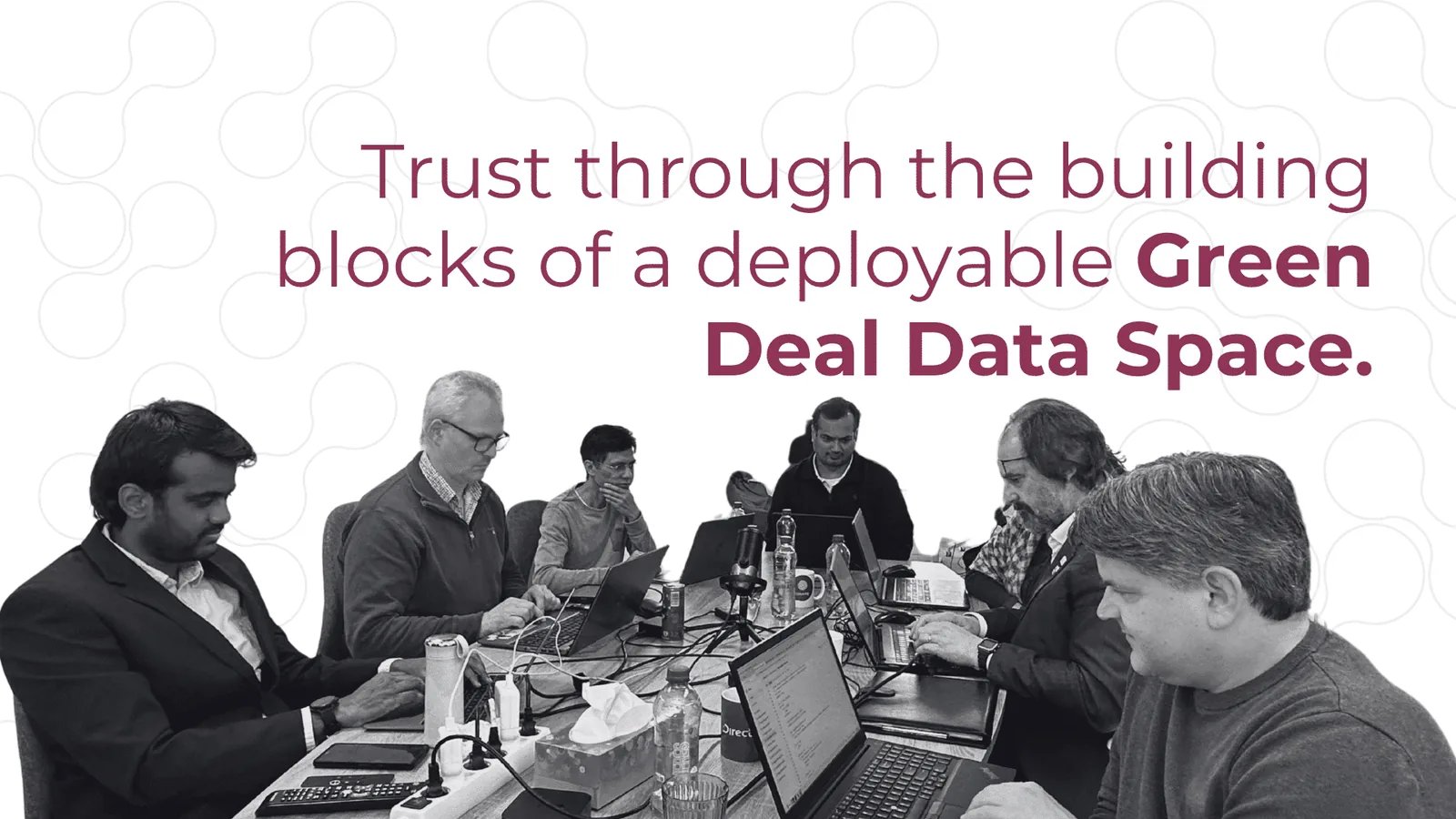
20 April 2026
Building the GDDS: From Code to Reality
From Barcelona to Rotterdam, SAGE is building the Green Deal Data Space through hands-on codesprints—delivering trusted, secure data sharing with iSHARE.